


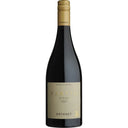
Swinney Farvie Syrah Frankland River 2024
Frankland River sits several hours south east of Perth, well outside the routes most people take when they're touring WA wine country. It doesn't have the name recognition of Margaret River or the Barossa, and for most of its history it didn't have wines that demanded the same attention either. That's changed, and the Farvie range is the clearest evidence of it. Farvie is the estate's top tier — a three-wine lineup of single-varietal Rhône reds, each sourced from specific blocks within the estate's Powderbark and Wilson's Pool vineyards, each made with the kind of precision that suggests the people behind it are acutely aware they have something unusual on their hands.
The 2024 Farvie Syrah draws from two sites: Powderbark B2 and Wilson's Pool 801. These are dry-grown, vertically trellised vines, and only a sub-section of each block qualifies for Farvie production — the sections where soil type and farming approach allow full dry farming without compromise. Shadecloth is used on the afternoon sun side of the rows to manage ripening. Bunch selection is rigorous. The result is fruit picked at the kind of balance that most vineyards would consider early, but that here reads as exactly right.
In the winery, things are kept deliberate. Sixty-seven percent whole bunches go into the ferment, everything wild, gravity-fed to a French oak vat and two demi-muids. The wine spends ten days on skins before being pressed directly to large-format seasoned French oak, where it stays for eleven months. No fining. Minimal filtration. Residual sugar at 0.5g/L, essentially dry. Alcohol sits at 13.8%, which is low enough that it never shows as warmth. It was harvested on the 23rd and 25th of February 2024 and bottled in February 2025.
The colour is deep and immediate — an inky purple-magenta that looks almost opaque when held at an angle but clears to a vivid, jewel-like transparency when tilted toward light. There's no browning at the rim. The legs are slow-moving and thin, which lines up with the modest alcohol. The bottle itself offers a cool, clean aroma from the moment you pull the cork — something mineral and a little saline, like ocean air over slate.
In the glass, the nose builds quickly. Black pepper is first, the cracked kind rather than the dusty kind, followed by aniseed and a cool floral note of violets. Underneath those there's something mineral and elemental — wet graphite, or slate pulled from a stream. There's very little fruit on first impression, which will either intrigue you or put you off, depending on what you're expecting. Give it ten minutes and blueberry starts to emerge, dark and precise, followed by a curl of smoked meat that sits at the back of everything like a low note. This is not a wine that opens on cue.
On the palate, the entry is energetic and focused. Ripe plums and blueberries arrive in good order, but they're not soft — there's a crunchiness to them, a freshness that keeps them from reading as jammy or overripe. The 67% whole-bunch inclusion is doing structural work here, providing a kind of herbal spice and fine-grained tannin architecture that wouldn't exist without it. The texture in the first moments on the palate has a kind of mineral grip — not rough or drying, more like the sensation of holding a piece of smooth stone. The acidity is clean and present without being obvious. Nothing here is trying to be impressive loudly.
As the wine sits on the mid-palate, the complexity starts to reveal itself. That savouriness from the nose — the nori, the graphite — translates into something more specific in the mouth. There's a quality that's difficult to name precisely: earthy but not rustic, meaty but not heavy, mineral but not austere. It occupies a space between flavour descriptors that you don't often encounter in Australian red wine. The spice from the whole bunches is integrated throughout, and a distinct blue fruit note — different from the plum on entry, more aromatic, more perfumed — appears about midway through and stays. The tannins at this point are abundant but fine-grained, the kind that coat without gripping.
The finish is long, cool, and clean. The graphite and slate texture follows through all the way to the end, and the fruit fades gradually rather than dropping off. The pepper returns lightly on the very back of the finish. There's no heat, no alcoholic warmth, nothing that feels unresolved. What's left after the wine has gone is a mineral, savoury impression that makes you want to go back to the glass. The tannins at the finish firm slightly but without drying the palate out. Everything integrates.
This is a wine that has already been noted by critics for a cellaring window of 15 to 20 years, and that assessment feels conservative rather than generous. At two years old, the 2024 Farvie Syrah is already showing real depth, but the structure here is wound tightly enough that it's clearly only part of the way through what it intends to become. If you have access to an allocation, the case for drinking one bottle now and holding the rest is obvious. If you can only get one, hold it.
Harvested: 23rd & 25th February 2024 | Bottled: February 2025 | pH 3.53 | TA 5.84 | RS 0.5g/L | 13.8% alc
Featured Products
View All

Related Posts
View All
Swinney Grenache Frankland River 2024

Swinney Syrah Frankland River 2024
winetrust.com Comment Policy
Please read our Comment Policy before commenting.