


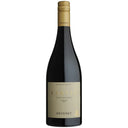
Swinney Farvie Grenache Frankland River 2024
Grenache from Frankland River still catches people off guard, and that's partly because the prevailing assumption about serious Australian Grenache is that it comes from the Barossa or McLaren Vale — old bush vines sitting in warm red soil, producing something round, generous, and fruit-forward. Frankland River is a different proposition. The region sits in the Great Southern, where the climate is considerably cooler and more marginal, and the soils are iron-rich lateritic gravel over clay — the kind of terrain that slows ripening, concentrates flavour without concentrating sugar, and pushes fruit toward tension and savouriness rather than softness and weight.
The Farvie Grenache has been the most discussed wine in this estate's lineup since its debut. In some vintages it's been called the standout of the three Farvie reds. The 2024 comes from dry-grown bush vines on the Wilson's Pool Vineyard, specifically the sections with the highest percentage of lateritic gravel in the topsoil — leaner ground that reduces vigour and focuses the vine's output. Fruit thinning and selective hand harvesting over multiple passes are standard practice here; the idea is that only fruit that has reached something close to ideal maturity makes the final selection.
In the winery, 60% whole bunches go into the ferment — a significant inclusion for Grenache, which is typically handled with more caution on the whole-bunch question due to the variety's sensitivity to stem tannin. Wild fermentation follows, then ten days on skins before the wine is pressed directly to large-format seasoned French oak, where it ages for eleven months. No fining, minimal filtration. Alcohol at 13.9%. Harvested 1st March 2024, bottled 25th February 2025. The specs are precise: pH 3.37, acid at 5.88g/L — higher acidity than you'd find in Grenache from warmer regions, which is part of what gives this wine its structure.
The colour is a clear, gleaming crimson-ruby — translucent and bright rather than dark. You can read text through it. Against the light it shifts to a warm garnet at the centre and a paler, almost pink-red at the rim. There's no clouding, no brown. The nose from the glass is immediate and already complex: cherries first, then mulberry and warm plum, and underneath those a distinct savoury note — fresh beetroot, something earthy and almost funky in the best possible sense. There are truffles in there too, and a thread of orange rind that weaves through everything without dominating. Given time in the glass, florals arrive — subtle, not perfumed, more like dried rose petals than fresh ones.
On the palate the entry has real energy. The fruit is ripe without being soft — there's a tartness and precision to it that you don't usually associate with Grenache. Kirsch and crushed red cherry come first, with black plum behind them. The acidity shows immediately and drives the wine forward without ever becoming aggressive. The 60% whole-bunch inclusion is doing something specific here: it's building a fineness of tannin grain and a spice and herbal thread that gives the wine shape without ever feeling structural in a heavy or extractive sense. The texture on the palate in those first moments is precise and almost crystalline.
Through the mid-palate the complexity opens considerably. The savoury, earthy dimension that was present but restrained on the nose moves to the foreground: something mineral and iron-inflected, the classic Frankland River character showing in a richer, more textured form than it does in the estate Grenache. The florals from the nose — those dried rose petals — translate onto the palate as a subtle perfume that rides above the fruit. There's a suppleness to the texture that builds as the wine develops across the mid-palate: fine tannins, well-integrated, supporting rather than framing the fruit.
The finish is long and precise. The cherry and plum fruit recedes gradually, the mineral quality intensifies slightly in the final moments, and the acidity maintains its thread right through to the end. The tannins stay fine and integrated — no drying, no grip, just a clean structural presence that gives the finish real length. There's a faint spice note at the very end, a remnant of the whole-bunch inclusion, that adds the final complexity. The wine is still wound tightly enough at this stage of its life that a decant of an hour or two significantly improves it; given the right cellaring conditions, the drinking window extends comfortably to ten to twelve years.
There is a case to be made that the 2024 Farvie Grenache is the most complete wine in the Farvie lineup this vintage. The combination of precision, complexity, and sheer drinkability — the wine engages without demanding — is difficult to match. If you have access to an allocation, this is the bottle to open now alongside one or two held for later. The comparison across time will be instructive.
Harvested: 1st March 2024 | Bottled: 25th February 2025 | pH 3.37 | TA 5.88 | RS 0.2g/L | 13.9% alc
Featured Products
View All

Related Posts
View All
Swinney Grenache Frankland River 2024

Swinney Syrah Frankland River 2024
winetrust.com Comment Policy
Please read our Comment Policy before commenting.